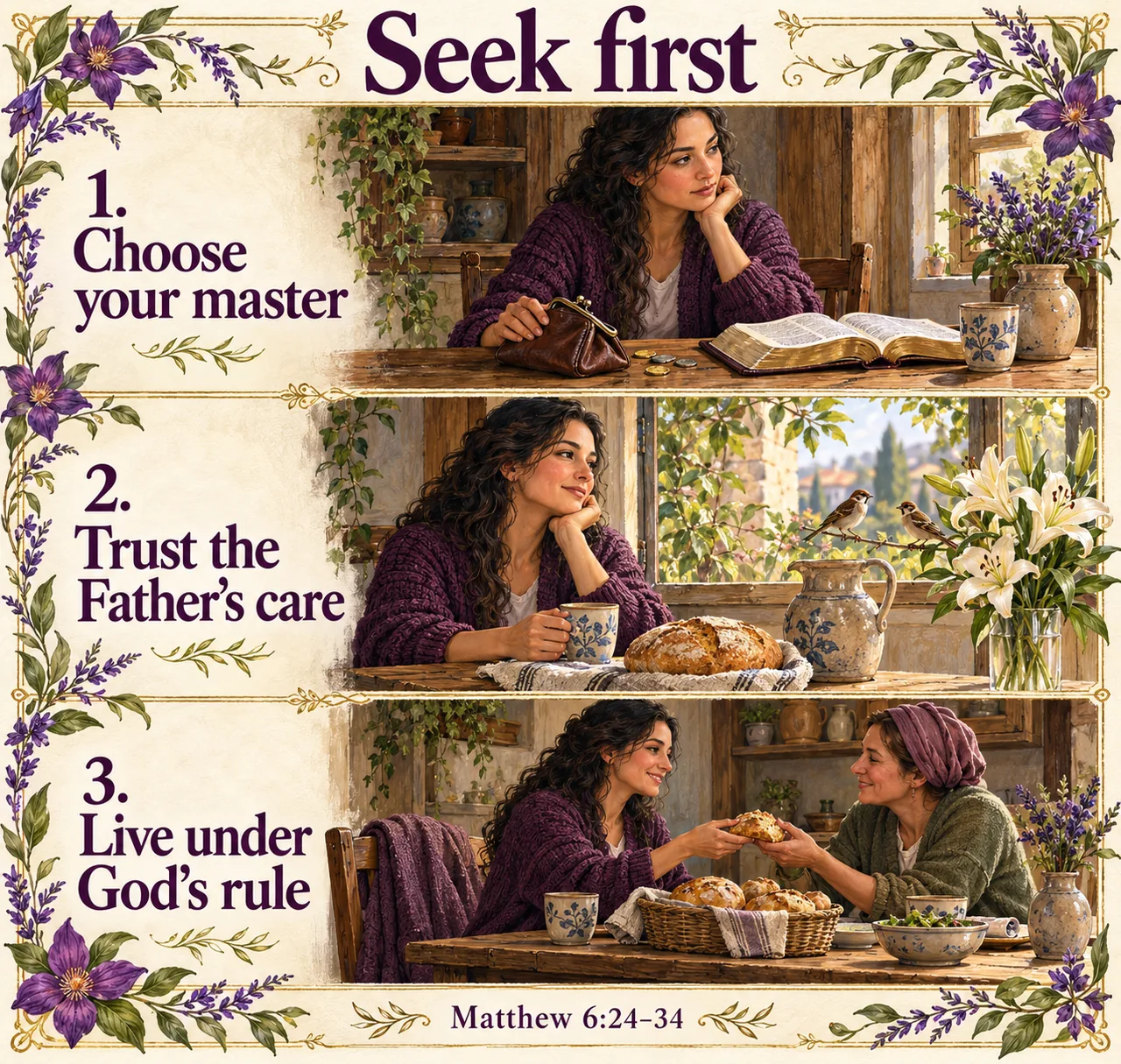
To seek first the kingdom of God is to make God’s rule and what is right before Him the governing concern of your life, trusting your Father with your needs. In Matthew 6:33, Jesus is speaking about food, drink, clothing and tomorrow. He calls His disciples to live under God’s care rather than let the pursuit of security become their master.
That is a searching invitation. Most of us do not need convincing that food or clothing matters. Jesus does not need convincing either. He says the Father knows we need them. The question is what will direct our lives as we seek them.
The verse begins with a choice of masters
Read back a few lines before the familiar promise:
No one can serve two masters: Either he will hate the one and love the other, or he will be devoted to the one and despise the other. You cannot serve both God and money.
Matthew 6:24, Berean Standard Bible (BSB)
Jesus has already spoken about treasures that decay or can be stolen, and about the way the heart follows its treasure (Matthew 6:19–21). Now He names the conflict. Money can become more than something we use; it can become the authority we obey.
The next section begins with “Therefore.” Jesus moves from divided loyalty to worry about daily necessities. He asks His hearers to look at birds that are fed and flowers clothed with a beauty even Solomon could not match. These details draw our attention toward the Father’s care. He knows what His children need (Matthew 6:25–32).
The flowers do not make a worried person foolish for needing clothes. The birds do not make food unimportant. Jesus takes ordinary needs seriously while challenging the fear that makes those needs the centre of everything.
What are God’s kingdom and His righteousness?
Here is the command and promise together:
But seek first the kingdom of God and His righteousness, and all these things will be added unto you.
Matthew 6:33, BSB
God’s kingdom concerns His rule. Earlier in the same chapter, Jesus teaches His disciples to pray for the Father’s kingdom to come and His will to be done on earth as in heaven (Matthew 6:9–10). To seek that kingdom is to desire and submit to that will, including where it interrupts our own plans.
“His righteousness” keeps the instruction from becoming a vague wish to feel spiritual. In this sermon, Jesus speaks about mercy, reconciliation, truthful speech, love for enemies and generosity done without an audience. Righteousness reaches into how we treat other people and why we do what we do (Matthew 5; 6:1–4).
So seeking God first includes asking whether a decision is faithful to Him. Will we be truthful when a lie would protect our income? Will we make room for generosity when keeping everything feels safer? Will we seek reconciliation rather than protect the appearance of being right?
These questions concern the life grace produces. We are saved by God’s grace through faith in Christ, not by building a sufficiently impressive record of priorities. That same grace leads us into good works (Ephesians 2:8–10). Jesus’ command is a real call to obedience; it is not a price list for earning salvation.
“All these things” means the needs Jesus has named
The promise can become distorted when we detach it from the paragraph. “All these things” refers back to food, drink and clothing. Jesus does not offer an unlimited promise that putting God first will secure every opportunity, purchase or ambition we desire.
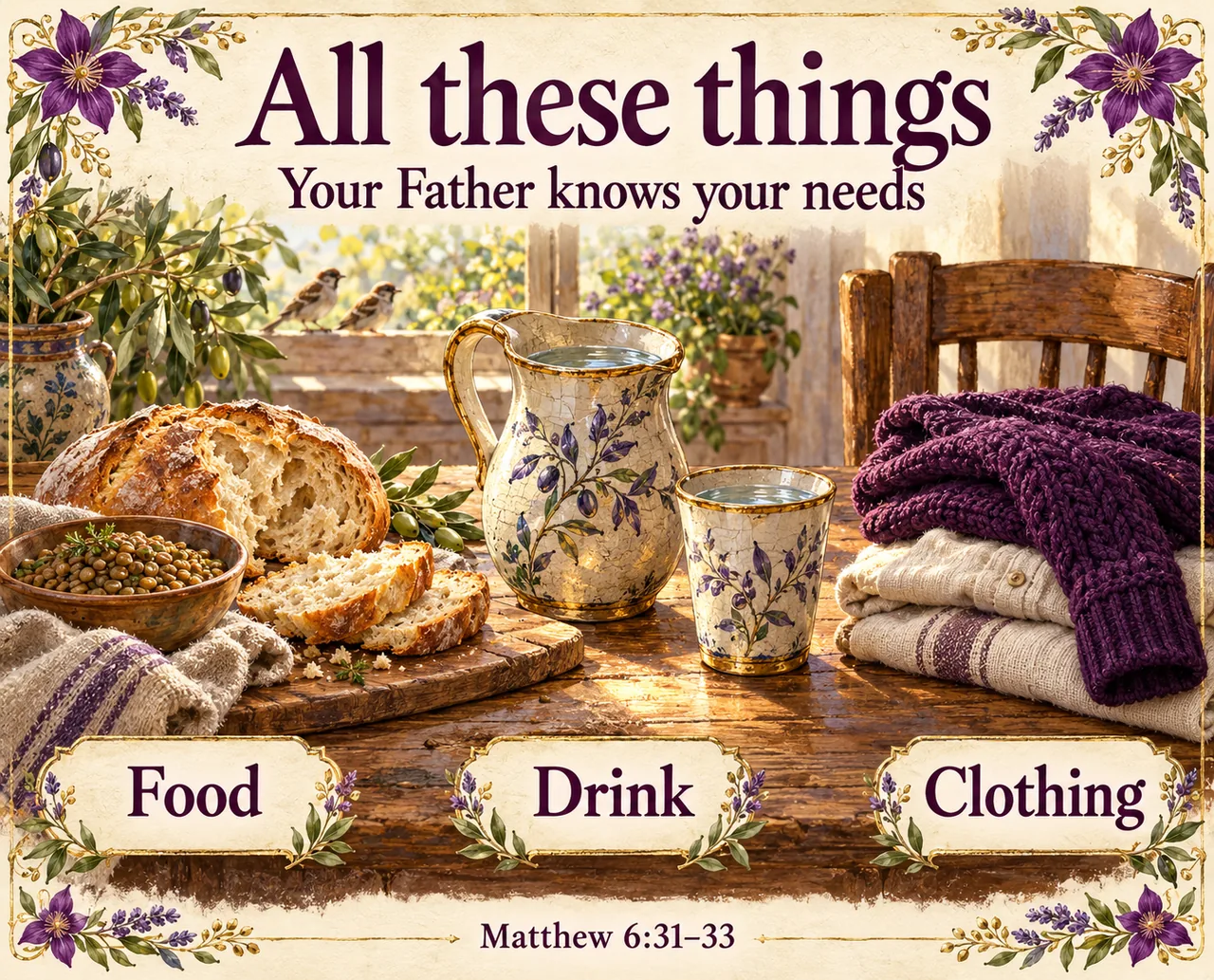
Nor is He proposing an exchange in which a certain amount of devotion buys financial comfort. That would leave money as the real goal, with God reduced to the means of obtaining it. The entire passage calls that loyalty into question.
We should still hear the reassurance Jesus actually gives: your heavenly Father knows your needs, and you may trust His care. We do not need to weaken His words into a vague hope that God might notice.
But Christian life also includes real hardship. In the next verse Jesus says that today has enough trouble of its own (Matthew 6:34). Later, Paul describes knowing both plenty and hunger, abundance and need, while learning contentment in Christ. He also thanks the Philippians for sharing in his trouble through their practical support (Philippians 4:11–16). Trust and receiving help belong together there.
A person’s shortage is therefore not evidence that they have failed to put God first. This verse should never become a verdict we pronounce over someone who needs a meal. The sermon itself has already assumed that God’s people will give to those in need.
What does seeking God first look like today?
“First” means more than the first item on a morning schedule. A time of prayer and Scripture can help us begin the day with God, but the question continues after we close the Bible. Whose will governs the next decision?
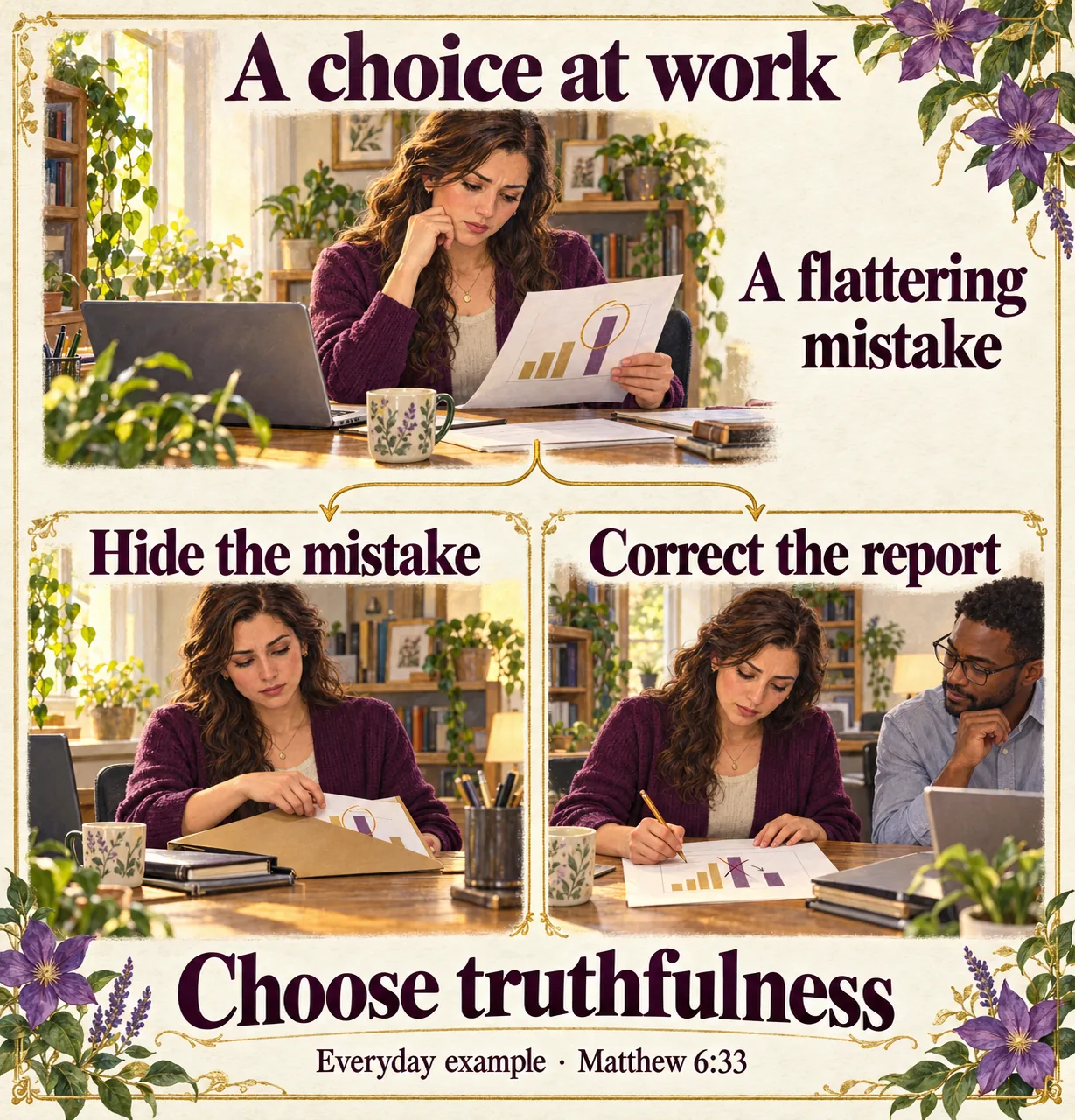
Suppose someone discovers a mistake in a work report that makes their results look better than they are. Correcting it may be uncomfortable. Leaving it alone would protect their reputation. Seeking God’s kingdom reaches into that small decision: tell the truth, because God’s righteousness matters more than the advantage of a misleading result.
The same allegiance shapes ordinary care for ourselves and others. We can work, plan and ask for help while trusting God. We can receive another believer’s support without pretending that faith has made us self-sufficient. We can attend to a neighbour’s need rather than only our own future security.
If worry keeps returning, bring the actual concern into prayer. Jesus taught us to ask for daily bread in this same chapter. You can ask plainly for what you need and ask for wisdom to take the next responsible step. You do not have to hide the worry in order to begin obeying.
At the end of the passage, Jesus brings our attention back to today. That gives the question a manageable shape: What would faithfulness to God look like in the responsibility or choice before me now?
You may not know how tomorrow will unfold. You can still tell the truth today. You can seek what is right, accept help, share what you have, and ask your Father for daily bread. These ordinary acts belong to a life in which His kingdom comes first.
Read Matthew 6:19–34 as one passage, or continue with Bible verses about provision.