“Be still and know that I am God” calls us to stop resisting God’s rule and recognize who He is. In Psalm 46, these words come amid roaring waters, collapsing kingdoms and broken weapons. They give comfort because God is a refuge in that troubled world, not because a quiet moment can make trouble disappear.
We often meet the verse on a peaceful picture: a lake, a mountain, an empty bench. There is nothing wrong with taking time to pray quietly. But the psalm gives us a much stronger reason to rest than the stillness of the scenery. Almost everything in its opening scene is moving.
Read the words with the rest of the psalm
The first line establishes where the singers’ confidence comes from:
God is our refuge and strength, an ever-present help in times of trouble.
Psalm 46:1, Berean Standard Bible (BSB)
Notice the last few words. God is present in trouble. The song does not begin by announcing that danger has passed.
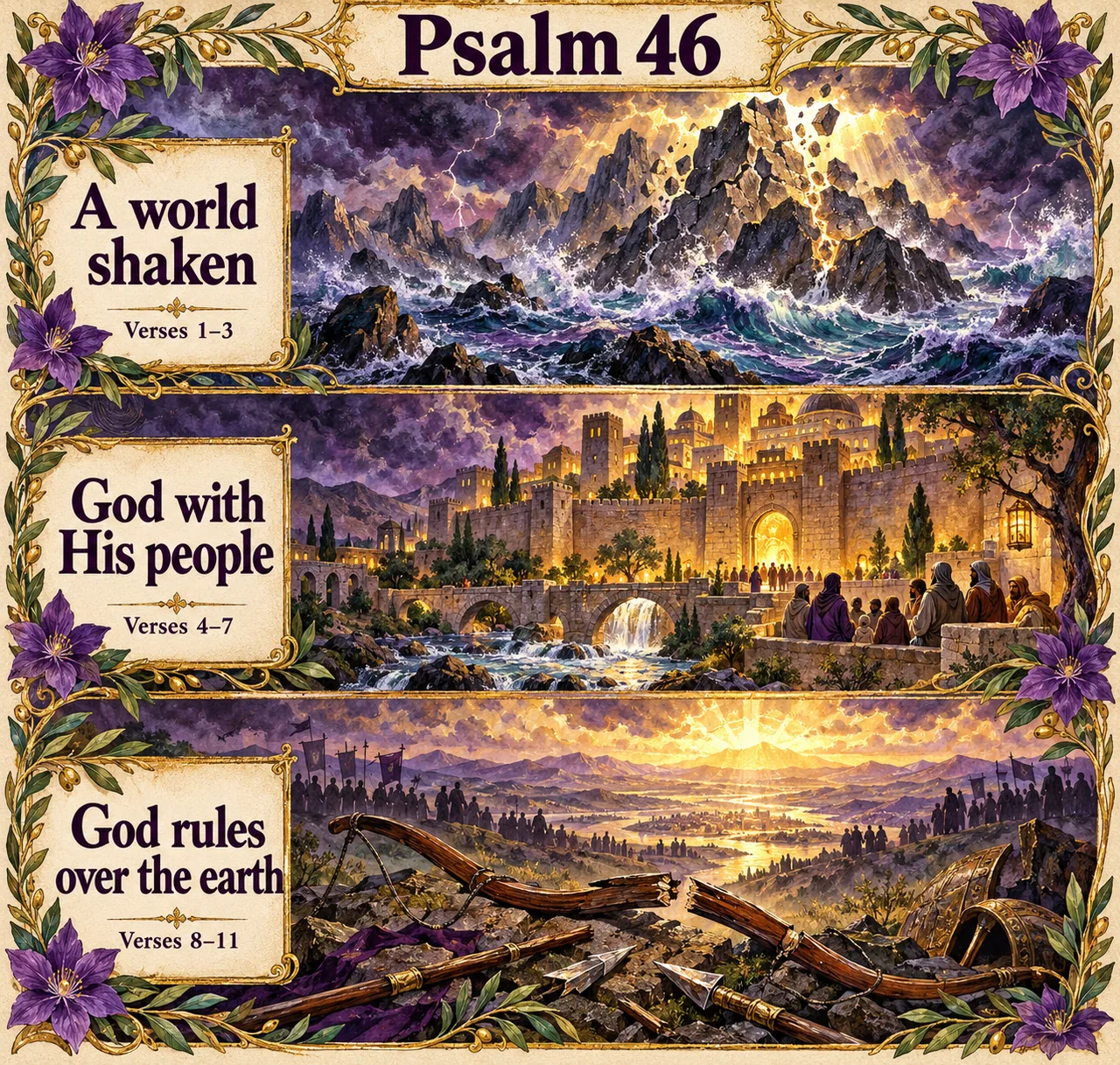
The earth changes. Mountains topple into the sea. Water roars and foams. These are the things people expect to be solid, pictured coming apart. Yet the singers answer with trust: because God is their refuge, they will not fear even this (Psalm 46:2–3).
Then the scene changes to the city of God, with a river that brings delight. What makes the city secure is stated plainly: God is within her. Outside, nations rage and kingdoms crumble; when God raises His voice, the earth melts (Psalm 46:4–6). The poem measures the noise of nations against the authority of God.
This is a song for God’s people to sing together. Its repeated confession is “The LORD of Hosts is with us; the God of Jacob is our fortress” (Psalm 46:7, BSB). The strength of the confession lies in the One who is with them. They are not praising their own ability to remain composed.
“Be still” comes after the weapons are broken
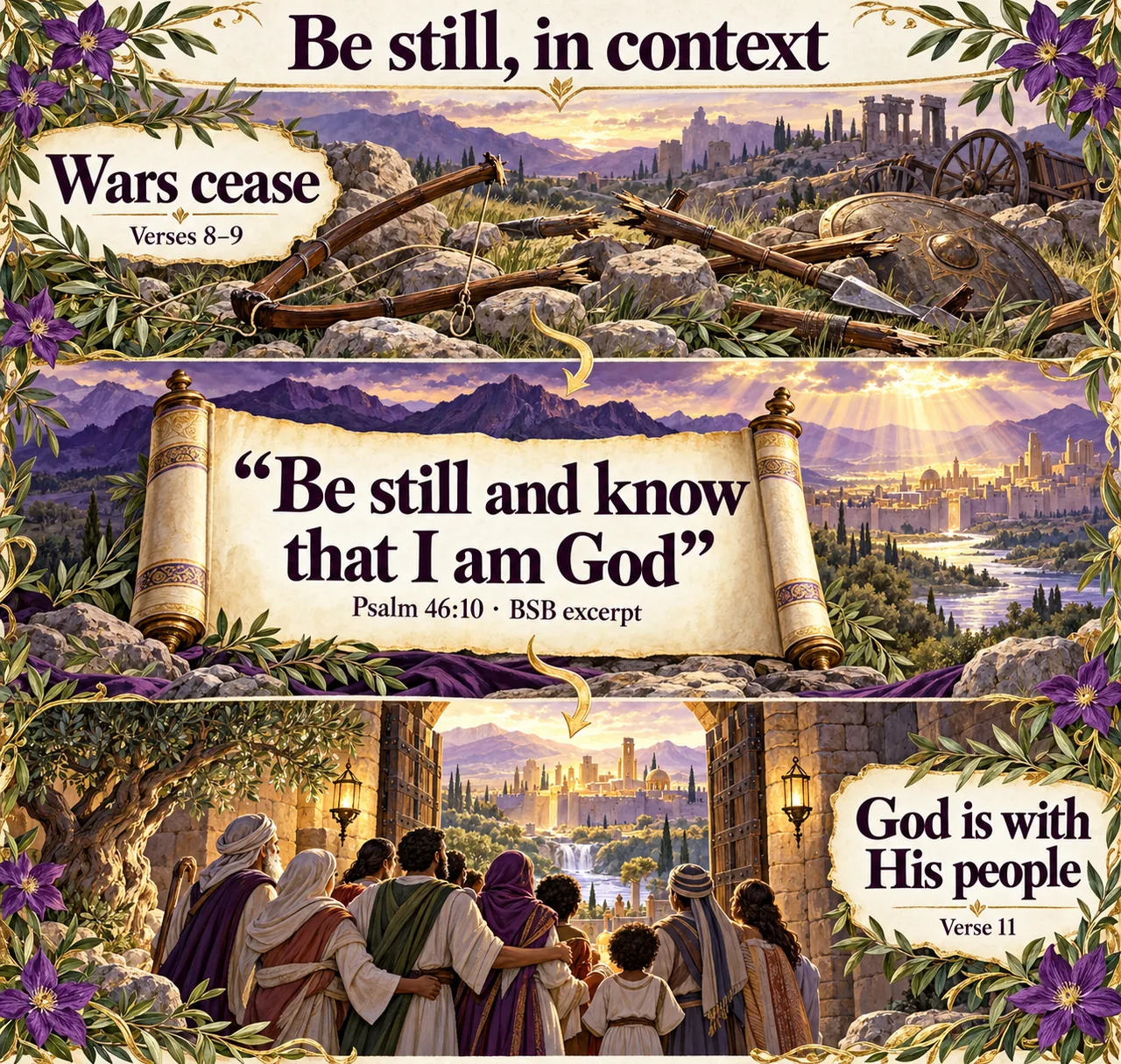
Before we reach the familiar line, the psalm asks us to look at the works of the Lord. He brings devastation, makes wars cease, breaks bows and shatters spears (Psalm 46:8–9). The setting is far larger than a person’s busy schedule.
Then God speaks:
Be still and know that I am God; I will be exalted among the nations, I will be exalted over the earth.
Psalm 46:10, BSB
The end of the sentence helps us understand the beginning. God names the nations and the whole earth as the place where He will be exalted. “Be still” belongs to that declaration of His authority.
Read beside the shattered weapons, the command confronts the world’s opposition to God: stop, and recognize the Lord. It also gives His people a reason to cease their frightened striving. The psalm’s hearers can trust the God whose rule no raging kingdom can finally overturn.
The verse therefore reaches deeper than “take a break.” It asks us to acknowledge that God is God. Quiet prayer can be one way we respond, but silence itself is not the source of the promise. A quiet room cannot provide what the psalm finds in the Lord.
Why this is still a word of comfort
Some explanations of Psalm 46 emphasize its force toward the nations so strongly that a troubled reader might wonder whether the familiar comfort has been taken away. Read the last verse. Immediately after God’s declaration, the people sing their refrain again: the Lord is with us; the God of Jacob is our fortress (Psalm 46:11).
The psalm holds authority and comfort together. The God who ends wars is the God His people call their refuge. His power is the reason the refrain can stand.
That gives us room to approach Him before our feelings settle. You do not have to become perfectly calm to read this psalm or pray its words. Its first line offers help in trouble, and its opening picture has room for a world that feels frighteningly unstable.
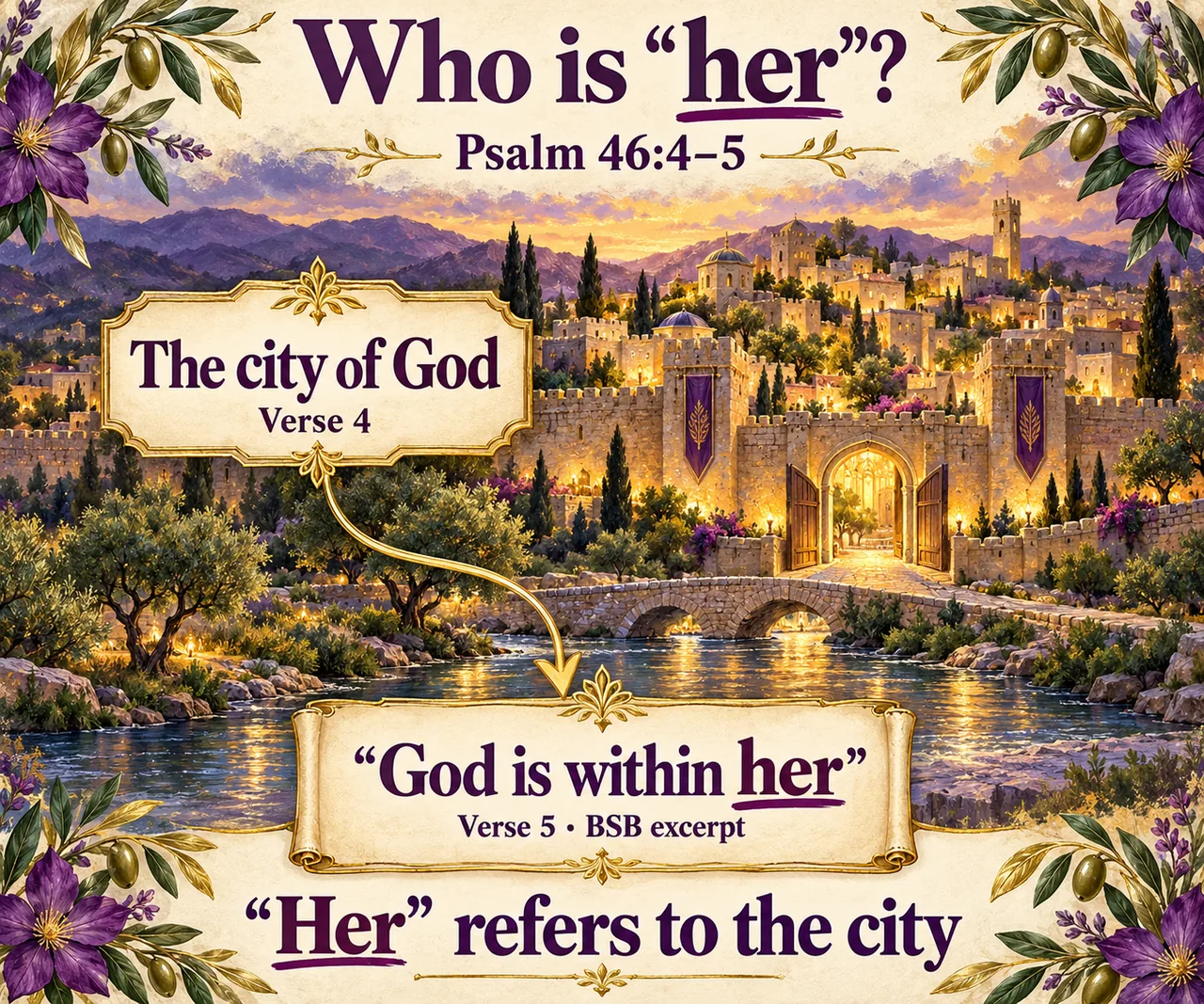
Nor should we turn its pictures into personal predictions. The city in verses 4–5 is the city of God within the psalm, not a guarantee that your own circumstances will be repaired by morning. The “her” in “God is within her” refers to that city. A reader can take comfort from God’s faithfulness without being promised a particular timetable.
For Christians, Jesus’ words give that trust a clear personal focus. Speaking to His disciples before His arrest, He tells them that they will have trouble in the world and that He has overcome the world (John 16:33). His victory does not require us to deny the trouble He has just named.
How to respond to Psalm 46 today
Start with the whole psalm. It is only eleven verses, and the movement matters: trouble, God’s presence, His command, and the repeated confession of trust. Let the opening “our” draw you beyond carrying everything alone. This is a song you can read with another believer as well as in private.
Then name what has become so large in your attention. Perhaps it is uncertainty about work, an argument you keep rehearsing, or news you cannot change. The psalm’s words help us bring those concerns before God without pretending that we can control the whole world.
Ask what faithfulness requires of you now. There may be a conversation to have, ordinary work to do, or help to request. Acknowledging God’s rule does not turn neglect into trust. It frees us to do the work actually given to us without claiming responsibility for everything beyond it.
If a few quiet minutes help you attend to the passage, take them. If the room is noisy or your thoughts are unsettled, you can still pray. You might use these words as your own response:
Lord, You are our refuge and strength. I cannot hold everything together. Help me trust You, do what is right before me, and remember that You are with Your people. Amen.
The psalm leaves us with something better than confidence in how well we have prayed: “The LORD of Hosts is with us.”
For further reading, open Psalm 46 from the beginning, or explore Bible verses about trust.